Hi, there! If you’re here, you’ve probably been to one of my talks on media literacy. This page is designed to share a few resources to help you!
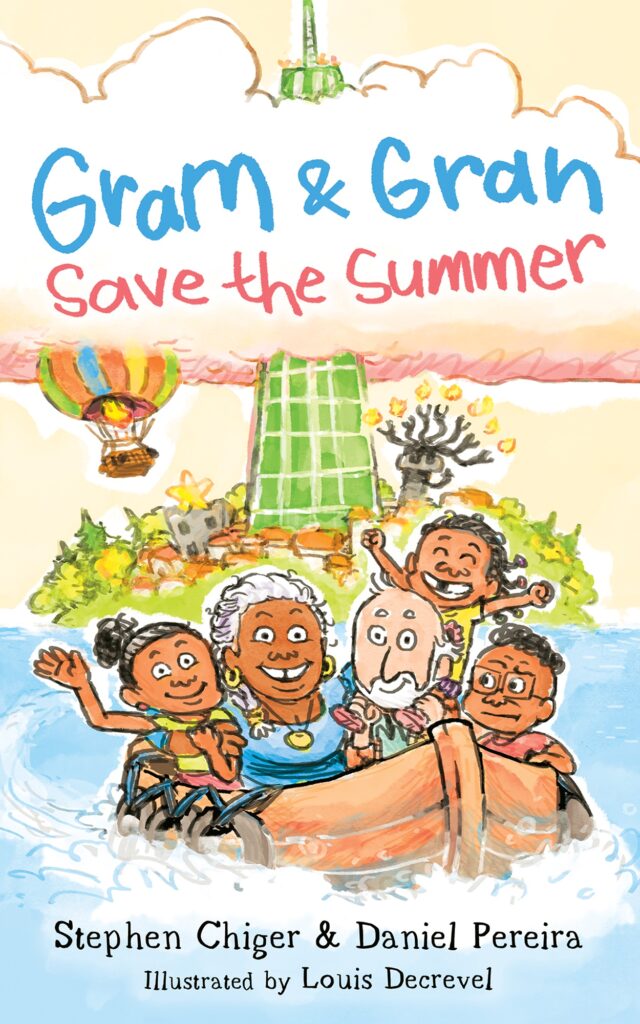
First, I hope you’ll check out Gram and Gran Save the Summer, a book for elementary and middle school students that teaches media literacy concepts (from bias to evaluating expertise to social media algorithms). It’s designed to be playful and fun and open up conversations unlike any other book out there!
- You can read Kirkus’s review here,
- see our free curriculum guide here,
- explore testimonials and a sample chapter here,
- and of course buy it here.
I run school assemblies but am also happy to do a Zoom chat with any class that reads it for free.
Families: Common Sense Media offers these tips and activities for families looking to integrate media literacy into your home conversations.
Educators: Here are some other resources I that are hopefully helpful to you if you’re building or strengthening your media literacy instruction:
– In 2025, New York State published a media literacy toolkit. There are loads of resources in it!
– The News Literacy project has an almost overwhelming amount of resources, starting in grade 4 (though largely aimed at older students). Check out the resource library, along with their e-learning platform Checkology (targeted at grades 5-12). If you are building curriculum, you’ll very much appreciate their media literacy standards and grade-by-grade articulation of skills.
– Want to live in the now? RumorGuard (also from the NLP) includes lessons on a framework and techniques for evaluating online information, along with recent fact checks.
– Common Sense Media recently released a digital literacy and wellbeing curriculum, organized by grade and strand here.
– Poynter’s MediaWise curriculum resources are aimed at HS students and should develop even further following a recent partnership with YouTube. (Poynter is a think tank that trains journalists.)
– Got an awesome school library to support you? The NJ association of school librarians put together model curriculum frameworks for K-5, 6-8, and 9-12. They also linked a few examples from NJ schools.
– The Civic Online Reasoning Group (formerly SHEG) has loads of standalone lessons or full curricula, and it’s research driven.
– Canada’s MediaSmarts has a large bank of resources and lessons you can explore.